Why did God scatter the nations—and how did that scattering become the pathway to salvation?
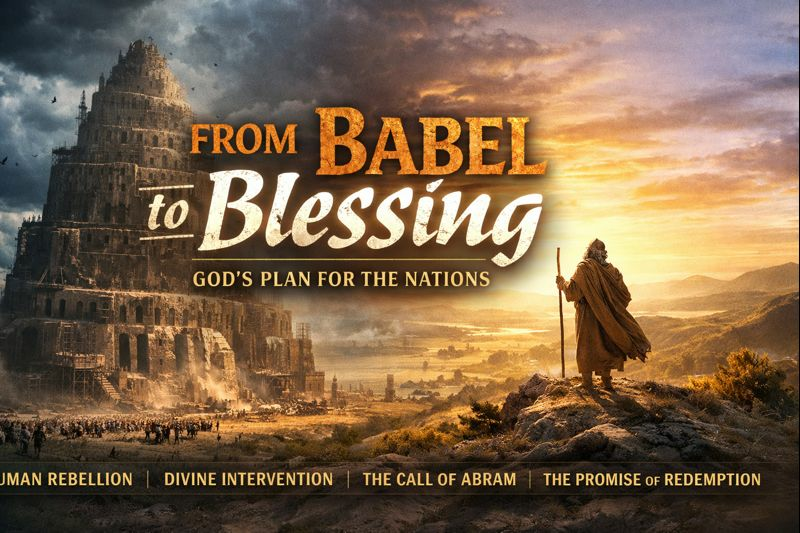
This sermon walks through Genesis 10–11, revealing how the Table of Nations, the Tower of Babel, and the genealogy of Shem are not random history, but a carefully structured account of human rebellion and divine mercy. Humanity unites with one language and one purpose, yet uses that unity to resist God’s command to fill the earth, seeking security, identity, and glory apart from Him. Babel exposes the danger of unity without obedience—and why God intervenes.
But Genesis 11 does not end with judgment. It ends with hope.
As global rebellion is restrained, God quietly narrows His focus from all nations to one family, from one family to one man—Abram. Where Babel sought to make a name, God promises to give a name. Where humanity built upward in pride, God calls one man to walk forward in faith. Through genealogy, delay, partial obedience, and finally separation, God prepares the stage for redemption by grace, not human effort.
This message traces:
-
The theological meaning of Babel and the origin of nations and languages
-
Why God scattered humanity—and why that scattering was mercy
-
How Babel becomes the blueprint for human pride and false unity
-
Why God’s answer to global rebellion is not a system, but a servant
-
How Abram’s call marks the turning point from judgment to promise
Genesis 11 closes not with human achievement, but with quiet preparation for divine promise. This sermon invites every listener to wrestle with the same enduring question:
Are we building for our own name—or trusting God to give the name only He can give?